Home

Voices from the Past: Lisa (sagrae), Undiagnosed Bio

Leave a comment

Im a mother of 4 use to work full time till I got to sick and very tired.  Not sure what I have been to alot of drs. My tish flucuates my t4 is always in low range of normal, my cortisol tends to be very low in am and through the day. Ive done saliva test blood tests and urine tests. Im either boarderline or below and its been almost 2 years, 2 surgeries and alot of stress and financial hardship to my family. I had sleep apnea surgery first, then my ovaries removed (that proved the pcos i knew i had). Ive now been told I have reactive hypoglycemia. Been put on many different anti depressants to control my moods, since I never know from one minute to the next how I will be.

saliva test   reference range

1.6               7.0-10.0

1.9               3.0-6.0

.9                  2.0-4.0

.9                  <1.5

serum cortisol tested 1 month later

.6                 4.0-22.0

free testo

3                  2-45


t4 tested 1 year ago

5.0               4.7-13.3

t4 tested 2 weeks ago

1.11            0.8-1.8

tsh tested 3months ago

1.94            .40-4.50

tsh tested 1 year ago

4.14             .35-4.94

my acth test

20                6-50

lh test

58                10-54.7  keep in mind ive had a total hysterectomy 6 months ago


Im wondering how a dr can figure out what is wrong with me if everything flucuates all the time, and im wondering what is wrong with me? please anybody out there please shed some light on what this could be . Theres days i really feel out of my mind. Current medications started 3 months ago lithium 900 welbutrin 150 estradial 1mg provera 5mg

Voices from the Past: Jestina (jestina902), Pituitary Bio

2 Comments

Hello there! My name is Jestina and I’m 16 years old. I just recently found out that I have Cushing’s from an endocrinologist in Washington D.C. It has taken three years to find a diagnosis. I have struggled with hormone issues ever since I was thirteen and my old family doctor originally diagnosed me with diabetes and PCOS. I didn’t think that it was unusual, especially because my mom has PCOS and diabetes runs in my family. My doctor told me that I was going through treatment for PCOS by giving me a pill to take. When I would take it, I would become very sick and I had unbearable stomach pain. It got to the point where I stopped taking it because it was hurting so badly. I was also not having any results. I still had unusual hair growth and I was starting to gain weight. This went on for a year.

About a year later, I started to face horrible back pain. I have scoliosis and my family, along with my specialists believed that it was caused by my spinal fusion. I started physical therapy when I was 15. I started to develop the “buffalo hump” and my physical therapist believed that it was the cause of spending too much time online. I thought that it was very strange though because I didn’t go online very much. I didn’t even have Facebook or any other type of social networking account. So, I went through about six months of therapy and I saw a small improvement but it didn’t last very long.

When I turned 16, I started to face even worse pain than before in my upper back. I went through multiple rounds of X-rays and spent two months home from school while my specialist was trying to find what was wrong but each time, he could never think of a reason for why I would be facing so much pain. I ended up going through a round of pain injections and it eased the pain enough for me to be back in school for the remainder of the school year. On my follow-up appointment after having the injections, my specialist suggested that maybe my pain had been caused by a hormonal problem. My mom decided to change family doctors and we went into her office less than a month ago. When my new doctor reviewed the medicines that I had been taking, she then informed us that the medicine that my old doctor gave me was actually for my diabetes and that it was the reason why I hadn’t seen any results. After I described my symptoms, (buffalo hump, moon face, unusual hair growth and weight gain, etc.) she left the room for about forty minutes to research. When she returned, she suggested that I had Cushing’s and that I should see an endocrinologist. She ordered a few rounds of blood tests and gave a referral to a doctor in Washington D.C.

My endocrinologist reviewed the blood tests and agreed with my family doctor that I most likely had Cushing’s. He ordered more blood tests and a 24-hour urine collection and they came back the way that he expected. I am now awaiting a CT scan for my surgery which should happen sometime in the next few weeks. I am hoping for great results. Apparently once my surgery is finished, I shouldn’t see anymore problems with diabetes, PCOS, or the symptoms that come along with Cushing’s.

Thank you so much for reading my bio!

MariaLaura, PCOS Bio

Leave a comment

Another Golden Oldie, this bio was last updated December 8, 2008.

~~~

Dear friends, I’ve made every possible test in these months, and I don’t have cushing.

I’m only an obese woman with PCOS, high blood pressure, insuline-resistence (thanks to this, even if I’m making the diet, I don’t succeed to lose many Kilos and moreover I can’t take the medicine for the insuline-resistence because my transaminases are still high) without diabetes (my glycemy after three months of diet is in a normal range). Now ‘m not happy…

In the end, I wanna wish you a wonderful Christmas day and a new year full of victories.

Kirsty (kirstymnz), Ectopic Adrenal Bio

1 Comment

Another Golden Oldie, Kirsty’s bio was last updated 08/18/2009.

~~~

I don’t really remember when it first started. It was probably about a year ago when I think about it.

I found myself becoming easily tired all the time. I went from being a social butterfly and life of the party to an ‘old nana’ who stayed home all the time and went to bed early. At the time, I didn’t think anything of it; I just put it down to working hard and not sleeping well. I often had disturbed sleeps because I regularly (3 or 4 times a night) got up during the night to go to the bathroom and once I was awake, it sometimes took up to 2 hours to get back to sleep.

As the year progressed, I rapidly began to gain weight. Putting it down to ‘eating to many chocolate biscuits’ and not enough exercise, I began going to the gym 4-5 times per week and basically eating ‘rabbit food’.

The obsessive cleaning habit probably began around the same time as the weight gain; it got to the point where I couldn’t possibly think about doing anything else until I had cleaned every nook and cranny.

Throughout all of this, I was having very sporadic periods, which were very painful. I never imagined they could possibly be linked. I decided to visit my GP, who sent me off for numerous tests including an ultrasound, which resulted in a diagnosis of polycystic ovaries.

My GP referred me to an endocrinologist who then requested more tests, including a 24 hour urine collection (something I became very accustomed to during the course of my illness, eventually having to do them weekly). I heard nothing as a result of the tests, so I assumed all was fine.

As the months passed, my weight continued to raise, as it did, my self esteem fell. I also began to notice bright red stretch marks appearing on my stomach.

I reached the stage where my self esteem was so low that I decided to return to my GP. The first thing she said to me when I walked into her practice was “your face looks very cushingoid.” Having no idea what she meant, I sat down as she looked through my file. As she came across my test results that had been requested by the endocrinologist, her face dropped. The level of cortisol (stress hormone) in my urine was over 2000mg (the average person needs around 30mg per day). She instantly picked up the phone in a desperate bid to contact the endocrinologist, but was unable to get hold of him. Having left a number of messages, she told me she would be in touch once she had heard back, and so I left. I wasn’t really too concerned as at this stage, I had no idea just how important cortisol really was.

The next day at work, a phone call came through for me. It was the endocrinologist. He said I desperately needed to come in to see him. I left work straight away. When I arrived, he advised me I had Cushing’s syndrome. He spent the next few minutes telling me what this was, although it all went in one ear and out the other once he told me that it is 99% of the time caused by a pituitary tumor; all I could think of once he said tumor was ‘cancer’.

The following Monday, I was admitted to hospital for 10 days of tests (including 4 hourly blood tests)during which time my food obsession began (this obsession progressed to be the worst of them and became all I could think about). These tests concluded that I did indeed have Cushing’s.

The months that followed proved to be the hardest that I have ever faced. MRI scans, CT scans, numerous X rays. The hardest of all these was what they call a petrusal vein sampling (this is where they insert a catheter into the groin through the femoral vein which goes up to the base of the brain to look at the pituitary, they do this while awake – I could actually feel them moving around in my head.)

This test concluded that my Cushing’s was being caused by a tumor somewhere other than the pituitary (this only happens in 1% of cases, and there is about a 1 in 10 million chance of getting it). The question now was “where is the tumor?” I happened to be at one of my regular appointments at the same time as the Endocrinologist was to attend a meeting with the head of CT.

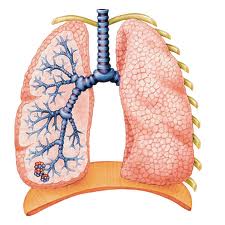
lungsTogether they looked at a CT scan I had previously had of my lungs, on which they spotted a small nodule which they believed could be the cause. Numerous more tests were to follow, including one where radioactive liquid (which I had to wait for over a month for to arrive from Australia) was injected into a vein in my arm, with the purpose of highlighting any tumors on a CT scan.

After such a long wait, this test proved a waste of time as it showed nothing (it turns out it only works 50% of the time anyway). Around the same time, I started having severe anxiety attacks, brought on by several major stresses. I decided the only way to ease the anxiety was to remove all the stresses possible; I did this by moving home to my parents.

The next week, another CT scan was required to see if the nodule had grown, it hadn’t. Feeling completely stumped, the endocrinologist decided to take a risk and remove the part of my lung that the nodule was on. Because it was so small, the surgeon required a hook wire to be placed in it in order to see where it was. This procedure was incredibly painful and one of the worst things during the whole illness that I’ve faced.

Disappointingly, this surgery was a failure, leaving me in the high dependency unit for 6 days and in immense pain.

The next step which was seen as a definite cure was to remove the adrenal glands (this really was a last resort, as once these are removed; hydrocortisone replacement is required for life in order to stay alive).

After this surgery, I spent another 6 days in the hospital, during which time, I experienced mood swings, dizziness, nausea and much more while my body adjusted to lower cortisol levels. I was sent home on morphine as I was still in so much pain from the surgery, however when I went in for a checkup 5 days after being discharged, the endocrinologist couldn’t believe I was still on it. In total I had been on it for 6 weeks, resulting in severe withdrawals when I stopped taking it (why anyone would voluntarily take drugs I will never know after going through this).

I am now 5 weeks down the track. I am not going back to normal as quickly as I had expected, physically; I am constantly tired and am still in pain from the lung operation which was 2 months ago, I’m told this could last up to year.

However, on a positive note, I have lost around 5 of the 15 kgs gained during the illness. I am also mostly back to normal mentally.

My Cushing’s disease is cured now, however I am now labeled as being a sufferer of Addison’s disease (where there are no adrenals, or the adrenals don’t work).

There is a long road ahead still, including reconstructive surgery of my legs, arms and torso, but I sure am glad to be out the other side of the worst of it.

In Memory of Kate Myers ~ June 23, 2014

Leave a comment

kate-fbkate

Kate (Fairley on the Cushing’s Help message boards)  was only 46 when she died on June 23, 2014.  Her board signature read:

After 2 failed pit surgeries and a CSF leak repair,
BLA on Sept. 11, 2008 w/Dr. Fraker at UPenn
Gamma knife radiation at UPenn Oct. 2009
Now disabled and homebound. No pit, no adrenals and radiation damage to my hypothalamus.
My cure is God’s will, and I still have hope and faith!

During her too-short life, she provided help and support to other Cushies.

Her National Geographic video in 2007

Her BlogTalkRadio Interview in 2008: http://www.blogtalkradio.com/cushingshelp/2008/07/17/interview-with-kate-fairley

Articles to help others:

Kate’s Family Letter
Kate’s Packing Suggestions For Surgery
Kate’s Pituitary Surgery Observations

Kate’s bio from 2008:

Hi y’all! I will try to make this short, but there is a lot to say.

I stumbled across this board after a google search last night. Yesterday, I finally saw a real endocrinologist. I am 39 years old. I weigh 362. I was diagnosed by a reproductive endocrinologist with PCOS at age 30, but all of my symptoms started at age 22.

At age 22, I was an avid runner, healthy at 140-145 pounds and 5’7″. I got a knee injury and stopped running right around the time that my periods just….stopped. And by stopped, I mean completely disappeared after mostly regular periods since age 12. I was tested by the student health clinic at UGA, and referred to an obgyn for lap exploration for endometriosis, which was ruled out. I remember that they ran some bloodwork and ultimately came back with this frustrating response: We don’t know what it is, but it’s probably stress-related because your cortisol is elevated.

Soon thereafter, I gained 80 pounds in about 6 months, and another 30 the next six months. Suddenly, in one year, I was 110 pounds heavier than my original weight of 140. I recall my mom and sister talking about how fast I was gaining weight. At the time, I blamed myself: I wasn’t eating right, I’d had to stop running due to the knee injury and my metabolism must have been “used” to the running; I was going through some family problems, so it must be that I’m eating for emotional reasons related to depression. You name the self-blame category, and I tried them all on for size.

Whatever the reason, I stopped avoiding mirrors and cameras. The person looking back at me was a stranger, and acquaintances had stopped recognizing me. A bank refused to cash my security deposit refund check from my landlord when I graduated because I no longer looked like my student ID or my driver’s license. I was pulled over for speeding while driving my dad’s Mercedes graduation weekend, and the cop who pulled me over almost arrested me for presenting a false ID. These are some really painful memories, and I wonder if anyone here can relate to the pain of losing your physical identity to the point that you are a stranger to yourself and others?

Speaking of size, from age 24 to 26 I remained around 250, had very irregular periods occuring only a few times a year (some induced), developed cystic acne in weird places, like my chest, shoulders, buttocks (yikes!), found dark, angry purple stretch marks across my abdomen (some of which I thought were so severe that my insides were going to come out through them) which I blamed on the weight gain, the appearance of a pronounced buffalo hump (which actually started at age 22 at the beginning of the weight gain), dark black hairs on my fair Scottish chin (and I’m talking I now have to shave twice daily), a slight darkening of the skin around my neck and a heavy darkening of the skin in my groin area, tiny skin tags on my neck. I was feeling truly lovely by graduation from law school and my wedding to my wonderful DH.

At age 26, I ballooned again, this time up to 280-300, where I stayed until age 32, when I went up to 326. The pretty girl who used to get cat calls when she ran was no more. She had been buried under a mountain of masculined flesh. I still had a pretty, albeit very round, face, though. And I consoled myself that I still have lovely long blonde hair — that is, until it started falling out, breaking off, feeling like straw.

At age 30, I read about PCOS on the internet and referred myself to a reproductive endocrinologist, who confirmed insulin resistance after a glucose tolerance test. I do not know what else he tested for — I believe my testosterone was high. He prescribed Metformin, but after not having great success on it after 5-6 months, I quit taking it, and seeing him. Dumb move.

Two years later, at age 32, I weighed 326. In desperation, I went on Phentermine for 3 months and lost 80 pounds the wrong way, basically starving. I was back down to 240-250, where I remained from age 33-35. After the weight loss, I got my period a few times, and started thinking about trying to have a baby. Many ultrasounds per month over a few months revealed that I just wasn’t ovulating. I decided to put off starting the family when the doctor started talking about IVF, etc. It just seemed risky to me — my body, after all, felt SICK all the time, and I couldn’t imagine carrying a baby and it winding up to be healthy.

At age 35, I ballooned again, this time significantly — from 240 to 320 in the space of 6 months. Another 45 pounds added by age 37, so that’s 125 pounds in two year. I’ve remained between 345-365 for the last two years, depending on how closely I was following my nutritionist’s recommended 1600 calorie per day diet….which was not all the time.

Which takes me to last year. I went for a physical because I wasn’t feeling well, kept getting sick, had a lot of fatigue, weird sweating where my hair would get totally drenched for no reason. At this point, I was diagnosed with high blood pressure, hypothyroism (which has now been modified to Hashimoto’s thyroidis), high cholesterol (although this was present at age 30 when I got the PCOS diagnosis). I went back to my repro-endo, and resolved to make myself stay on Metformin this time. All last year was a series of monthly blood work and attempts to lose weight with an eye toward trying to get pregnant this year. By the end of the year, I was successful in taking off only 20 pounds, and my repro-endo (always with an eye toward fertility and not health), really pushed me to give up on losing weight at that moment and to start taking Clomid. Or else, he said. The words that broke my heart: this may be your last chance.

So, skip forward to January 2006. My ovaries are blown out and they are clear — no blockages. I get cleared to start fertility treatments. My husband undergoes his own embarrassing tests. I think we have an agenda here, but my mind was chewing on serious concerns that I was simply too unhealthy to be considering trying this. That, and I felt it would be a futile effort.

By the way, more than a year on the Metformin with no real changes to anything. Why doesn’t my body respond to it like other people with PCOS?

Then late March, I started experiencing extreme fatigue. And I’m not talking about the kind where you need to take a nap on a Sunday afternoon to gear up for the week ahead (which I’d always considered a nice indulgence, but not a necessity). I’m talking debilitating, life-altering fatigue. It didn’t start out right away to be debilitating — or maybe I just made the usual excuses as I always do relating to my health: I’m still getting over that flu/cold from last month. I just got a promotion at work (though I note a greatly reduced stress and caseload now that I am a managing attorney. My weight is causing it. Whatever.

I let it go on for a full two months before I started to really worry, or admit to myself that my quality life had taken a serious downward turn. You see, despite my weight and my scary appearance, I have always been the “director” type. By that I mean that last year, I worked with two other women to direct 100 volunteers to start a summer camp for inner city kids, and I had enough energy to run this ambitious new project and to film, produce and edit a 30 minute documentary on it by the end of the summer.

In contrast, I had to take a backseat this year. I basically sat in a chair and answered the questions of volunteers, made a few phone calls here and there, and was simply a “presence” in case something major went wrong. Such a major change from the year before, where I was running the whole show 14 hours a day and loving it.

But I am getting ahead of myself. (Is anyone still reading this? I must be narcissitic to think so….yet, I wonder if anyone else has gone through a similar progression….)

Back to May. After two months of this fatigue, I change to a new primary care physician and get a whole workup: blood, urine, thyroid ultrasound, cardiac stress test, liver ultrasound when my enzymes, which had been slightly elevated, were found to have doubled since January. Appointments with a gastroenterologist, and FINALLY….a REAL endocrinologist. Ruled out any serious liver problems (and my levels, surprisingly, dropped back to the slightly elevated level in a space of 3 weeks and no treatment).

Yesterday, I heard a word I’d only heard spoken once before in my life: Cushings. Way back when I was 22 and had started gaining weight so rapidly, I had a boyfriend who worked the graveyard shift at the local hospital. He spent the better part of a non-eventful week of nights pouring over medical books in the library. He excitedly showed me the pages he’d photocopied, which had sketches of a woman with a very rounded face (like mine), striae on her stomach (like mine), abdomenal obesity (like mine) and a pronounced buffalo hump. Although my former boyfriend was just a college student working his way through his music degree by earing some money moonlighting as a hospital security guard, he was the first one to note all of these tell-tale signs.

When I got my diagnosis of PCOS, I remember discounting his amateur diagnosis, and I never thought of it again.

Until yesterday, when my new endo asked me if anyone had ever tested my cortisol or if I’d ever done a 24 hour urine test. I said no, and he started writing out the referral form along with like 15-20 different blood tests. And although we’d started our appointment with him telling me he agreed with my repro-endo’s encouragement to go ahead and try to get pregnant if I can, by the end of the visit, he was telling me not everyone is meant to be a parent, there is always adoption, etc. The only thing that happened during the appointment was that I gave him my basic history of weight gain, described the fatigue, and let him examine my striae, buffalo hump and legs (which were hidden under a long straight skirt). The question about the urine screen and corisol came after this physical exam, during which he was taking lots of notes.

Then the word, which was not spoken directly to me but to his nurse practioner as I was making my two-week appointment in the reception area outside the examining room: “She looks classic Cushings. I’ll be interested to get those results.”

Cushings. Cushings. No– that’s not me. I’m not that weird-shaped, hairy, mannish-looking, round-faced, hump-backed creature my boyfriend had shown me a picture of 16 years earlier. I have PCOS, right? It’s just my fault. I don’t eat right. If I’d just eat better, I wouldn’t be 2.5 times my weight in college. Right?

I quickly came home and did an internet search. Within an hour, I was sitting in front of the computer, reading some bios here and BAWLING, just crying some body-wracking sobs as I looked at the pictures of the people on this board. Here, here (!!!!) is an entire community who has the same, wrenchingly painful picture-proven physical progression that I went through. The same symptoms and signs. Words of encouragement — of….hope. I didn’t feel scared to read about the possibility of a pituitary tumor — last year, I had a brain MRI of the optic nerve because of sudden vision irregularities, headaches and shooting eye pain. The MRI showed nothing, but then again, the image was not that great because I had to go into the lower-resolution open MRI due to my size.

I have no idea whether I have Cushing’s Syndrome or not, but these are my first steps in my journey of finding out. After living my entire adult life with an array of progressive, untreatable, brushed-off symptoms (and years of self-blame for depression, obesity, becoming so unattractive), there was a major “click” as I read this site, and a sense of relief that maybe, just maybe, what I have has a name, I’m not crazy/fat/ugly/lazy, the PCOS diagnosis, which has gotten me nowhere is incorrect, and I might have something TREATABLE.

So, without going so far as to say I hope for a diagnosis, I am hopeful for some definitive answers. If my urine tests are inconclusive (and my doctor only ordered one and no serum cortisol tests), I am going to fly out to L.A. and see Dr. Friedman for a full work up.

And, I’ll keep you posted.

Thank you for posting your stories, which have encouraged me to advocate for myself in a manner and direction, which this time, may be fruitful.

Be well, my new friends,
Kate

p.s. I will post some pictures this week after I scan some of the “after” one….I try to avoid the camera at all costs. I’m sure you understand just what I’m talking about, and for that, I am truly grateful.


Voices From the Past: Erin, Undiagnosed Bio

1 Comment

Hi. My name is Erin and I’m 28 years old. The first time I ever heard of Cushing’s was a couple weeks ago while doing a search for hormonal imbalance. I’ll explain why later. I am currently doing a 24 hour urine cortisol test, and thought that in between peeing in the large container, I’d share what little story I have.ufc

I have always been a normal weight and healthy, well, up until about 5 years ago. I mean, obesity was NEVER a word that had to be used to describe my weight. I’m 5’8″ and lingered around 140 lbs my entire life. I was quite the drinker, too. I started gaining weight when I was about 22 or 23, and started taking Adderol to get the weight down, and it worked like a charm. (I am currently a recovering alcoholic and have been in recovery for over a year now.)

When I started trying to get sober, I noticed little things, but mainly the weight gain. I have always had larger hips and thighs and a smaller waist, so when I began to look 6 months pregnant, I thought it was odd (and embarrasing). I have bruised very easy every since I was a teenager, but in the past few years the bruises come easier and are quite large. My acne will just not quit, and I started sprouting these thick hairs on my face, chest, and abdomen. My face has ballooned out like a pumpkin, and I don’t hardly recognize myself anymore.

In May 2012 I had a miscarriage at 12 weeks. During the pregnancy I started getting these purple stretch marks all over my thighs and hips, and since I had neve been pregnant before, decided this was normal. Before then I was having trouble getting pregnant, but just chalked it up to bad timing. After the miscarriage, I noticed my menstrual cycles were different. They had shortened from 26-27 days to 22 days, and just didn’t seem right. I started seeing my gynecologist every month, but kept getting dismissed because it hadn’t been a full year since the loss, and my hormones were probably still imbalanced. I did get them to test for PCOS, and everything came back normal, including an ultrasound, which just made me seem crazy.  I switched gyns and eventually had a hormonal blood test, which revealed very low estrogen and progesterone, and I was referred to a fertility specialist. Another blood test there revealed my ovaries are not responding very well and not secreating enough of the AMH hormone.

About a month and a half ago I decided to battle the bulge, and joined a gym and changed my diet. After 2 weeks of cardio and strenth training almost every day, I hadn’t lost a pound. Then at week 3, I finally noticed a 2 pound weight loss, but that’s when the knee pain started. For no reason at all, my knees became VERY sore, swollen, and were bruising from the inside of the joint. I saw an orthopedic who couldn’t find any evidence of injury, gave me a cortisone shot in each knee, and sent me on my way. I should also mention that a week before that I had a cortisone injection in my back for a herniated disc that was causing sciatic nerve pain.

A few days after the last set of injections in my knees, I started feeling very ill and run down. I had also just missed a period for the first time in my reproductive history, and after a negative blood pregnancy test, was told my hormones were too low for my period to start on its own. I thought I was feeling under the weather because of the missed period, so that’s when I started looking up hormonal imbalances online. When I came across the word Cushing’s, I couldn’t stop reading about it. I thought, oh my god, these people are me! They look like me! Thinking back over the years, all of these individual symptoms could be explained away due to stress, inactivity, lifestyle change, etc. But collectively, I started to see the bigger picture.

So, I am currently testing with my PCP. I am selfishly hoping that I get a quick diagnosis, or if it isn’t Cushing’s, that they find some other reason for all of these symptoms. But from what I’ve read this is going to be a long process.

Candy (cjbritton), Undiagnosed Bio

Leave a comment

In seeing an endocrinologist about normalizing my thyroid levels (Hashimoto’s), he became suspicious of Cushing’s.

I was diagnosed with PCOS in 2006 with a suspected onset of 13-14. We’ve done one blood test that came back further pointing to Cushing’s along with the signs & symptoms (i.e. buffalo hump, moon face, sweating, ruddy complexion, etc…). I will be seeing another endocrinologist in the near future (current one is closing his practice & moving to the Middle East) to confirm a diagnosis of Cushing’s.

If I do have Cushing’s it has to be endogenous, as I do not take any steroid mediations that are known to cause exogenous Cushing’s. I take Nasonex periodically, but not any more than I absolutely have to & I’m told that is too small a dose to be a problem.

Wish me luck in getting answers.

Cleo, Ectopic Cushing’s

Leave a comment

Did’t we all do this?

A young woman saved her own life after successfully self-diagnosing cancer/Cushing’s that doctors had missed because she researched her own worrying symptoms on TikTok.

Cleo Lambert, from Tring in Hertfordshire, had been unknowingly living with a cancerous tumour growing behind her liver for years.

Her life started to fall apart two-and-a-half years ago when her GP was unable to provide answers to the painful symptoms she was suffering.

However, this all changed when the prospective fashion student undertook a TikTok scrolling session in the summer of 2024 and noticed a post which told her she may have a rare condition called Cushing’s Syndrome.

The 21-year-old undertook a TikTok scrolling session in the summer of 2024 and noticed a post which told her she may have a rare condition called Cushing’s syndrome.

Her findings prompted doctors to order an X-ray, which revealed a 17cm cancerous mass had been growing inside the 21-year-old.

It was surgically removed and she immediately began life-saving chemotherapy.

Due to the size of the growth, medics told her that without the operation that year, she would not have survived.

Cleo’s findings prompted doctors to order an X-ray, which revealed a 17cm cancerous mass had been growing inside her.

“Doctors told me the tumours are ‘usually between 3-4cm, 5cm is more serious.'”, she told the Female Lead.

“They told me that mine had likely been growing for years and there was a chance it could even be cancerous.”

“A doctor also told me I’d probably saved a year of time based on how long a Cushing’s diagnosis could typically take. I think if I’d waited another year, with the size the tumour already was, I’d be dead.”

In the two-and-a-half years prior, Cleo had suffered from painful bouts of bloating after eating and had been putting on weight.

Cleo was seeing her usually thick locks of hair thinning at a rapid rate.

GPs initially told her she had polycystic ovary syndrome, a common hormonal disorder affecting women that was not curable but manageable through lifestyle choices.

But Cleo’s health continued to decline further and new symptoms – such as irregular periods, exhaustion and unexplained bruising – left her unable to leave her own house.

Desperate to find out what was wrong with her, Cleo managed to get a endocrinologist appointment booked in, but had 12 weeks to wait until she saw them.

It was during that period that Cleo undertook some research on the social media platform and found she had Cushing’s Syndrome – a rare condition caused by prolonged exposure to the stress hormone cortisol in the body.

“I saw a video that said: ‘Do you have these symptoms?’ and it listed extra weight around the stomach, a puffy face, exhaustion, hair loss, excessive hair growth in unusual places. I was reading a checklist of my life,” Cleo told the Female Lead.

“In the comments, people mentioned something called Cushing’s syndrome. I Googled it and immediately knew: this was me.”

Cleo ended up going down a “researching rabbit hole” into a “corner of health” she had never heard of before.

Armed with a mountain of research, Cleo went to her appointment in July 2024 and presented her theory, which the doctor agreed with.

Tests showed her cortisol levels were absurdly high, measuring at 1,334 nmol/l on one measure, where the normal level is around 135 nmol/l.

But more shockingly, X-rays revealed that Cleo had a 17cm tumour, the size of an aubergine, pushing up against her stomach and growing into her liver.

Cleo’s symptoms first started appearing after she returned home from travelling around Australia in the summer of 2022.

Despite being a regular gym goer and healthy eater, she was gaining weight easily and seeing her usually thick locks of hair become a lot thinner.

After being told she had PCOS, Cleo started to make changes to her lifestyle to see it it would help.

“I blamed the contraceptive pill and stopped taking it, but nothing changed,” She said.

“The doctors told me I had PCOS which I could manage it with diet and lifestyle changes. I cut out coffee, reduced carbs, stuck to low-impact exercise.”

But Cleo’s symptoms only got worse and things started to spiral in February 2024.

“My periods were irregular, I felt exhausted all the time, and I was getting strange new symptoms,” she said.

“I was getting nosebleeds, unexplained bruising, stretch marks spread across my body, appearing even from stretching after workouts.”

Alarm bells began to sound even louder when Cleo’s freshly inked tattoo left her arm with bruising on it for weeks, something which had never happened before.

She had been hoping to start university that summer, but her rapid health decline had left her not wanting to leave the house.

“The most frustrating part was not having any answers,” she said.

“No one said I looked different except my older sister, and I appreciated her honesty.

“I was desperate for answers. I felt like I was in someone else’s body and I knew there was something wrong, but felt helpless not understanding what it was.”

But thanks to her TikTok diagnosis, Cleo’s chemo treatment finishes this month and she is hopeful of going on holiday this summer and potentially go to university this September, a year later than planned.

As well as being grateful to the helpful content regarding her symptoms, Cleo also praised TikTok for enabling her to connect with other young woman and girls who were suffering from Cushing’s Syndrome.

“TikTok has played another role in my health journey. It helped me connect with a girl who’d been through almost the exact same thing – first misdiagnosed with PCOS, then later discovering she had Cushing’s too.

“Finding people my age going through similar experiences has been incredibly reassuring.

“While the UK’s National Health Service website is helpful, nothing compares to hearing real stories from creators on TikTok who are living it.

“I’d often reach out to them directly with specific questions, and those conversations gave me reassurance that medical information alone couldn’t.

“If you’d told me everything I was about to go through, I would’ve shit myself. But going from diagnosis to operation in two months meant there was no time to overthink, which was a weird kind of blessing.

“So, if you think something is wrong, trust your gut. You know what is normal for you. Keep pushing for answers. And keep scrolling on TikTok.”

For photos see: https://www.lbc.co.uk/news/health/tiktok-saved-my-life-student-life-threatening-tumour/

Emma (emma22), Undiagnosed Bio

Leave a comment

Hi there,

I’m not really sure where to start! I’m 22, and work full time (10-12 hour shifts) as a porter in the operating department of a city centre hospital- so i’m very very active, constantly walking/lifting/carrying on a daily basis.

I was diagnosed with chronic fatigue when i was 13 after a bout of severe flu/repeated shingles infections, and never really recovered, but i was gradually well enough to live a more or less normal teenage life. I have never struggled with my weight (a constant 9 stone at 5 foot 5), until a year ago, when i suddenly started suffering from extreme weight gain (7 stone in 10 months), fatigue, acne, mood swings, hair loss where there should be hair/hair growth where there shouldn’t be, stria, irregular periods (and when they arrive they’re incredibly heavy, buffalo hump, heat intolerance and all manner of horrible symptoms.

I’ve been diagnosed after tests and ultrasounds with PCOS and hypothyroidism, and am currently being treated with 75mg thyroxine (to be increased), and am due to start on metformin.

There’s been very little improvement in how i feel, and after a pretty horrible meeting with the endo, in which all she really did was call me fat, tell me to stop the late night trips to mcdonalds (I’M VEGAN! mcdonalds is pretty much the antichrist to us!) and refer me to the dietician. i felt really let down and all i could do was try to hold the tears in until i got back to the car.

she didn’t seem to realise that for a 22 year old woman to be feeling more like a 90 year old, is a pretty horrific experience. but i digress…

i’m due to be tested for cushings in a few days time with the low dose dexamethasone, and i know this is awful to say, but i’d jump for joy knowing what’s going on with my body at last.

although i know i have pcos and an underactive thyroid, i just know that there’s something else going on with me, and unfortunately my consultant just won’t listen to me.

my social life has disapeared, i just feel too goddam ill, not to mention my incredibly unsupportive boss, who seems to want to make my life a living hell because i’ve had to take a lot of time off work- she even screamed at me until i cried when i collapsed at work one day. i’ve actually taken to hiding in the toilets in the afternoon to have a nap, and to regroup, just so i can get through the day. never mind that i’m a 22 year old who has gained 7 stone in under a year- it’s hard to feel great about myself!!!

anyway, hopefully one day i’ll find out what’s wrong with me

this was me last year:


and this is me now:

quite a difference huh?! and apologie for the poor fashion sense!
anyway, wish me luck, and and my best wishes for everyone going through diagnoses/treatment for any health issues, we’ll get there in the end 🙂

Coleen (EyeRishGrl), Pituitary Bio

Leave a comment

Mid-2004, at age 24 and halfway through planning my wedding, I started gaining weight. Hair started growing on my chin. Unexplained bruises started appearing on my legs. The wedding dress I had ordered in January didn’t fit, and the salon had to rush-order an extra four yards of fabric, so the seamstress could insert an extra panel in the bodice.

No matter what I did, I couldn’t lose the weight. My face became round and red, and while I had never completely outgrown my teenage acne, it got 10 times worse. Even the strongest acne drug on the market, Accutane, couldn’t make it go away. I had been taking oral birth control pills to ease PMS cramps, but when I accidentally skipped a few pills in early 2006, my period never came. My gynecologist referred me to an reproductive endocrinologist who diagnosed me with Poly-Cystic Ovarian Syndrome. My blood sugar tested high; I was pre-diabetic. Unbeknownst to me, they tested my steroid levels. They were elevated, but out of the range of normal.

In September 2006, my father was watching a local NBC news (which was a bit unusual; he normally always watched the local ABC news). The health segment was on, which he normally ignores. They were profiling a woman with a rare disease called Cushing’s. The woman had the same round, red face, and distended stomach. He called for me to come see the TV. “I think that’s what you have.”

I found a general practitioner, as I didn’t have one at the time. Prior to my first appointment, I wrote out my health history. I attached pictures of myself as I used to be (prior to getting sick, I was about 130 pounds). I listed my complaints (always tired, bruising, no period, acne, high blood sugar, depression). I brought everything with me. His response? “You don’t have that; it’s too rare.” Instead he told me I had high blood pressure (another Cushing’s symptom), gave me a prescription and told me to come back in two weeks.

He bullied me into enrolling in a study on depression and anxiety through a local teaching hospital. In order to enroll, I needed to submit a urine test. The urine test showed above-normal steroid levels, but he continued to insist I did not have Cushing’s. The study weaned me off my anti-depressant and onto an anti-psychotic. I was to slowly increase my dosage, stay there for a month, then wean off. In the meantime, I was going back to the general practitioner every two weeks for a blood pressure check (paying a co-pay every time). The general practitioner continued to diagnose me with everything ELSE under the sun, even referring me to a neurologist to rule out early-onset Parkinson’s disease. The neurologist told me that my general practitioner was an “idiot” (his words) and said, “Get thyself to a endocrinologist.” I called for an appointment, but they couldn’t fit me in for two months.

In the meantime, the anxiety/depression study had me wean off the anti-psychotic, and I relapsed so deeply into depression, I contemplated but never attempted suicide.

I brought the same health history, photos and complaints to the endocrinologist in January 2007. I didn’t even finish my “presentation” when he said, “You have the most classic case of Cushing’s I’ve ever seen.” He explained what it was, and the different causes. He explained that I was most likely facing surgery, and I would need to contact an endocrinologist at one of two hospitals in the city. I went to the one that was able to give me the earlier appointment, which turned out to be the Hospital of the University of Pennsylvania.

My first appointment was very disappointing. They wanted to run their own battery of tests, the same tests I had already completed. To be honest, I broke down and cried on the exam table. But I did their tests. I got an MRI. They were concerned that my tests showed symptoms of Cushing’s, but there was no tumor visible on the MRI. They recommended I undergo a procedure called Inferior Petrosal Sinus Sampling. It happened in May 2007. I was sedated, and a catheter was inserted into the vein near my groin. Tubes were threaded up to my brain. I was given an injection of steroids, and my body’s reaction was measured. Results indicated the tumor was on the right side. Surgery was scheduled for the end of July 2007.

On July 3rd, after coming home from a meeting with a realtor where my then-husband and I put in an offer and good-faith deposit on our first home, I passed out and fell down the stairs. My family called 9-1-1, and the EMTs transported me to a local hospital’s emergency room. They tried 12 times to take blood, but were unsuccessful. They told me I was dehydrated, and to stop taking my blood pressure medication.

Two days later, I met with the ear, nose and throat doctor who would assist in the surgery. He explained his role, and the risks of the surgery, which included death. I asked how many have died from the surgery. He said that in the years he had been assisting the neurosurgeon who’d be doing my surgery, the only patient they’d ever lost on the table had undiagnosed blood clots in his lungs.

Three days later, while at work at a university in New Jersey, I collapsed again while standing at the copy machine. I was taken to a different hospital. My family arrived and explained my condition to them. They were unfamiliar with it, and asked for my endocrinologist’s phone number to consult with him. He directed them to check my lungs for clots. Sure enough, a CT scan showed massive blood clots on both lungs — they were 80% blocked. I was admitted to the ICU. I couldn’t even roll over in bed without gasping for breath. My surgery was cancelled.

I spent 5 days in the ICU while they did ultrasounds, CT scans and other tests. They wanted to give me Tissue Plasminogin Activator, a scary clot-busting drug that carries a risk of causing internal bleeding. I requested a transfer to the hospital where I was being treated for Cushing’s. I spent another five days in the hospital there, getting more ultrasounds and CT scans. They recommended a “wait and see” approach, and I was discharged on blood thinning medication.

Several months of doctor visits followed. I saw the endocrinologist, the neurosurgeon, the pulmonologist, and the hematologist. The first two argued with the second two about when surgery would be safe. I finally got word that my surgery would occur mid-December 2007.

The surgery itself was uneventful, and a suspicious mass was removed. My steroid levels plummeted (my pituitary had stopped producing steroids while the tumor made them) and I supplemented with hydrocortisone pills. At a follow-up appointment four months later, my endocrinologist was concerned that my pituitary had not “woken up” and started producing steroids on its own again. I had to wear a Medic Alert bracelet, because my body wouldn’t be able to cope with a major injury or illness.

It took almost a year for any steroids to be detected through blood tests. But in the meantime, the weight nearly melted off. My acne went away. My period returned. My blood pressure and blood sugar returned to normal. My depression eased. My hair thickened. I was able to sleep at night without a sleep aid. I stopped the blood thinners. Once my coritsol levels returned to normal, I only went back every six months, and later once a year, for follow-ups. My endocrinologist proclaimed me cured.

I am now 32 years old. My marriage did not survive Cushing’s disease, but I’m with someone new, and we have a healthy, happy baby boy. Part of the clots calcified in my lungs, and I will always be about 10% blocked (which means I’ll never run a marathon, but hey! I never planned to, haha). As the years pass, the struggle with Cushing’s feels like it happened to someone else.

Older Entries